

This is the first of a new series of posts on books I have finished recently and what I thought of them. Here are the books I read in April.
The Glass Pearls – Emeric Pressburger (audio, library)
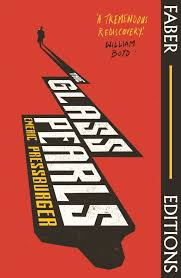
A classic book reissued by Faber. Pressburger was most known for his writing and directing of films like Black Narcissus and The Life and Death of Colonel Blimp, but he also penned this book about an ex-Nazi surgeon on the run in 1960s Britain. I found it a compelling, subtle narrative, focused on the protagonist (the ex-Nazi surgeon himself), his fears, desires and obsessions, as he pursues a single mother and seeks to retrieve a fortune from a Swiss bank account shared with a dead friend. It doesn’t prosetylize, but contrasts war crimes evidence of his brain experiments on concentration camp prisoners with his own assertions of the necessity of this work. The reader, I imagined, was meant to be shocked but also troubled by the unrepentant, reasoning attitude of this man who seems so harmless to the British people around him.The thrust of the narrative is around whether he will get his fortune and get away to South America, or get caught by various real or imagined mysterious figures following him. His eventual ending provides a sense of ironic justice but also leaves us without seeing him in the dock challenged with his crimes. One of the most remarkable aspects of this book, in my opinion, is that it was written by a man who was a refugee from Nazi Berlin himself and lost many relatives in concentration camps. I am in aw of the humane, empathetic and balanced approach that led Pressburger to make this man his protagonist and ask the reader, who at the time would most likely remember war, to empathize with him. Highly recommend.
The First Bad Man – Miranda July (DNF, digital, library)
Miranda July is a filmmaker, actress and writer whom I admire greatly. Me and You and Everyone We Know was a film about the tender strangeness of everyday life which has stayed with me. I took the opportunity to borrow her first novel from the library, and enjoyed the first few chapters enormously. Unfortunately, the protagonist July chose is almost perversely passive, so much so that it gave me anxiety even thinking about reading what would happen next. After reading some reviews that veered between 1 star and 5 stars, most including comments about how uncomfortable the reading experience was, I decided to DNF the book. This isn’t a reflection on July’s writing skills – they were clearly topnotch, fully immersing me in the protagonist’s strange consciousness and physical experience. That was the problem! I think it’s important to notice when we don’t gel with a book because of our own personality or situation. It’s not a failure of the author or the book, or the reader either. Just as all stories have a reader, not all stories are for the same reader. I will definitely explore July’s work again – perhaps her short stories!
Our Wives Under The Sea – Julia Armfield (audio, library)

I’d heard this book reviewed by several Booktubers who enjoyed it, but the concept of a lesbian love story with deep sea sci fi strangeness would have been enough to get me to try it! The book cover also does a good job I think of reflecting both the narrative and the ideas of identity blurring in and between those we love. I listened to this as an audiobook, and the alternating chapters narrated by Miri and her wife Leah were performed extremely well. The story is haunting. Leah is a biologist who has just returned from an overlong trip to the deep sea to investigate the species found there. Miri finds that her beloved wife is no longer the same; in fact so different that she doesn’t seem like Leah anymore. Told via both women, we get the history of their past, their relationship, their deep love for each other, and what really happened to Leah underwater. This book made me cry, not something I can often say.
Serendipities: Language and Lunacy – Umberto Eco (digital, library)

I’ve been on a bit of an Umberto Eco kick lately. He is such an erudite and nuanced writer. This book appeared on my library’s lending list and I thought I’d try Eco’s essays. This book focuses on how the mistakes people make with truth and language pursue them and affect society through time. Most prominently, he discusses the ongoing scholarly search for the ‘perfect language’ of Adam, where each word is a natural counterpart to the thing being described, inevitable and efficient.
The Island of the Day Before – Umberto Eco (ebook)
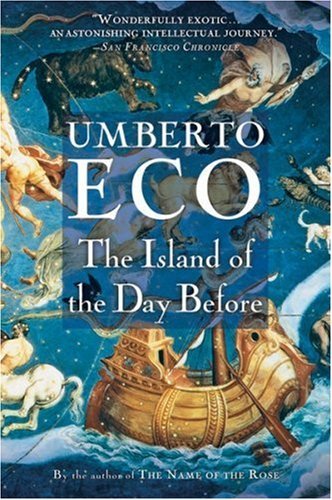
Earlier this year I reread Umberto Eco’s Foucault’s Pendulum, an old favourite. I was reminded of just how complex and fascinating Eco’s creative mind is! The Island of the Day Before is a book I initially borrowed and then bought in ebook version because there was so much exploration of fascinating ideas like the cataloguing of ideas, time and love and language. The protagonist is a young Italian man pressed into the search for identifying longitude while at sea, and who washes up on a ship wrecked close by an exotic island in the Pacific somewhere. This book is dense, but captivating, exploring the vagaries and ridiculous machinations of European politics of the 17th century, the confidence and competitiveness in scientific innovations, and the colonialist drive to explore a world they suspected was much bigger than they knew. The island Roberto views from his ship is both unknown and unknowable, representing his chivalrous love for a lady of a Parisian salon, and the world itself. But Roberto cannot swim.
Ruin: and Other Stories – Emma Hislop (digital, library)

Emma Hislop is a local (NZ) author with a burgeoning reputation. This, her first book, is a collection of stories, many of which have been published in prominent NZ literary journals. After I’d read this, I found that the book had been longlisted for the Ockam Book Awards this year. I’d never read her work before. Hislop’s style appears to be very plain, in many stories, with efficient prose that seeks to illustrate the familiar world (to me) of modern NZ life. The characters felt very real and tensions in relationships very relatable. I read the stories as presented in the book, and felt underwhelmed at first until I got to several stories which blew me out of the water. The Game, in which two longtime friends’ history of sadistic-masochistic drives is brought to the fore again by a man they are both attracted to. And Scarce Objects, a tense confrontation between exploitative Pakeha men and tough Maori women set in a colonial time. This story was menacing, surprising, satisfying, and deftly written. I understand Hislop is writing her first novel at the moment, and anticipate another prominent success.
The Magician – Colm Tóibín (print)
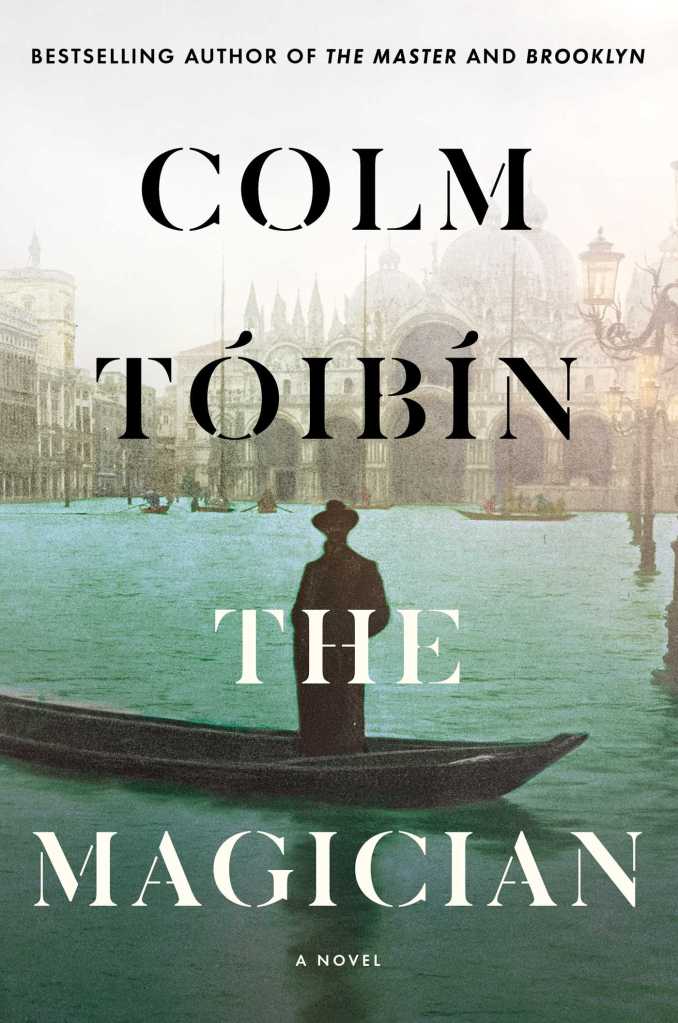
This has been on my bookshelf waiting for me for at least a year. Tóibín is such a well-known author I don’t need to introduce him, but this was the first book of his I’ve read. I was intrigued by the idea of a novelisation of Thomas Mann’s life, the 20th century German author responsible for The Magic Mountain and Buddenbrooks. Tóibín’s style in this book is restrained, prosy and gentle. He follows Mann from a young boy until his death, exploring his sexual, personal, and creative consciousness as he navigates both world wars, German political fragility and extremism, and being a refugee in America in the later years of his life. Mann comes across as a sensitive, dedicated, self-aware man who is often ineffectual in real life, relying on his wife and daughters, but strangely brave and impactful in his creative choices. I enjoyed the smooth flow of this novel, and thought it was strangely successful, much like Mann himself.
Ithaca – Claire North (print)

This is one of a swarm of Greek myth retellings that have been published in recent years, and I am here for it. While there’s some valid concerns around misrepresenting actual ancient literature, appropriating ancient Greek culture and ignoring modern Greek culture in this trend, I appreciate the efforts to bring mythology to modern readers and examine the similarities in human cultures across thousands of years. I’ve read novels covering Ariadne, Elektra, Atalanta, Achilles and Patroclus, and Circe, all of which I’ve enjoyed. Nothing has reached the pinnacle of Madeline Miller’s work, but Claire North’s novel, the first of a trilogy, comes pretty close. This novel looks at Ithaca while Odysseus is on his travels home from Troy, and is narrated by Hera. It focuses, delightfully, on the power and fragility of Greek queens, notably Penelope of course, and Helen and Clytemnestra. The most powerful emotive touchstone in the book rests on Hera’s love of her queens. This novel covers the death of Clytemnestra, a scene which remains in my mind as moment-by-moment magnificent. It is nice to see Clytemnestra presented in her complexity and strength, her hatred for her husband and her love for her son even as he prepares to kill her. Penelope, the subtle smart queen, creates a network of smart, strong Ithacan women to keep the island independent, strong, and safe. I understand that the next novel is narrated by a different Greek goddess and follows on from the first’s events. Can’t wait.

 ANGELA M. KING
Leave a comment